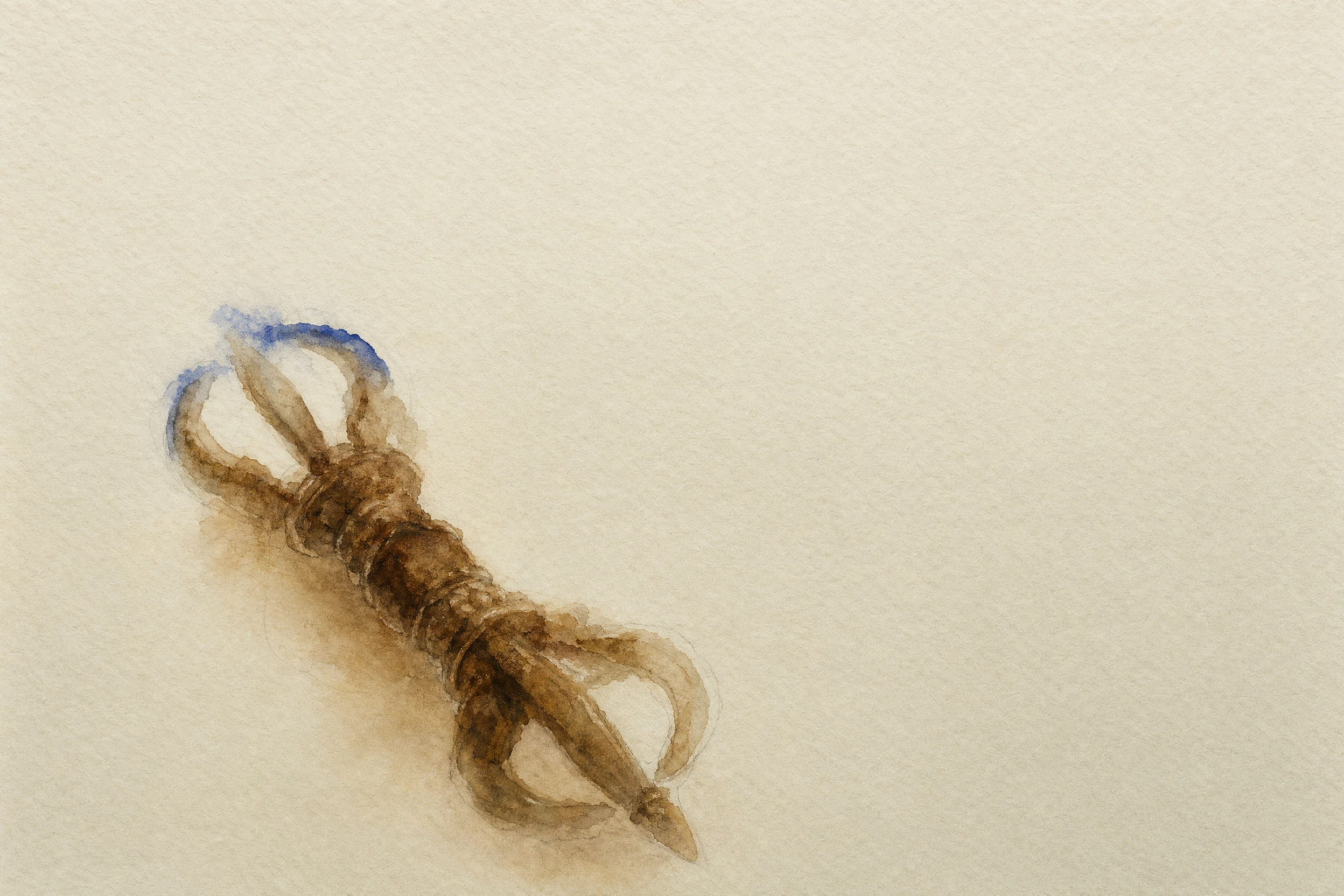
San Hyan Kamahayanikan
San Hyan Kamahayanikan Medieval Mpu Shri Sambhara Surya Warama KawiHomage to the Buddha!
This is the meaning of OṂ AḤ HUṂ. When taken as the foundation for teaching, the Lord of the Three Syllables is the ultimate reality, the vajra of body, speech, and mind.
Come, child, I shall teach you the Great Vehicle, the method of the Path of the Master of Mantras. You are a worthy vessel for the Great Path.
This Sacred Mahāyāna I shall teach to you. The Sacred Mantranaya is called the Mahāyāna, the Great Path. This I shall explain, this I shall teach to you, because you have become a worthy vessel, fit to be taught the sacred doctrine of the Mantranaya.
The Buddhas who have passed, and likewise those who are yet to come, and the Lords who are present, stand for the welfare of the world.
The Divine Lord Buddhas of the past, those who attained full enlightenment long ago in a time gone by, such as: the Lord Vipaśyin, Viśvabhū, Krakucchanda, Kanakamuni, Kāśyapa—all are called Buddhas of the past. As for the Lord Buddhas of the future, those who are on the verge of attaining full enlightenment, such as the Lord Ārya Maitreya and all up to Samantabhadra—all are called Buddhas of the future. Then there is the Lord Śrī Śākyamuni, called the Buddha of the present. He is your Divine Buddha now; it is His teaching that you follow. They all abide, concerned with the welfare and happiness of all beings, contemplating the liberation of the entire world from saṃsāra, striving to devise the means to extinguish the great dissolution in this world.
By all these heroes, having known this supreme method of mantras, the vajra, All-Knowingness was attained at the root of the Bodhi tree, which is without characteristics.
These three, the Divine Lord Buddhas of the past, future, and present, had no other path to find Buddhahood. This Mahāyāna, this Great Path, is what they followed; it was their path to reach the city of nirvāṇa. Because of their firm grasp of the Mantranaya, they attained All-Knowingness. That is the reason they found Buddhahood at the root of the Bodhi tree.
By this incomparable application of mantra, the great and terrible army of Māra was broken by the Lion of the Śākyas, the Protector.
The Lord Śrī Śākyamuni attained victory over Māra, and all the obstacles of Māra were defeated by Him: the māra of afflictions, the māra of aggregates, the māra of death, and the māra of the gods. All were defeated and subdued by the Lord. The reason He was able to defeat the māras was the glorious power and might of the sacred samādhi and the power of the sacred Mantranaya that He practiced.
Therefore, set your mind on this path to attain All-Knowingness. Listen, O good-hearted one, always concentrating your mind and dispelling all imaginings.
Therefore, what you must do is this: do not be hesitant in your contemplation of the sacred Mantranaya. Hold firmly to the sacred Mantranaya, so that All-Knowingness may be found by you. Listen carefully to these instructions I give you; do not be careless, be attentive to my words. Put an end to the conceptualizing mind, eliminate the clinging heart. Be at ease in your contemplation; do not doubt.
This is the excellent, glorious path, the Mahāyāna of great prosperity, by which you shall go forth and become Tathāgatas.
This sacred Mahāyāna, this Great Path, I reveal to you. Listen carefully. This is the straight road to heaven and liberation, able to bestow great prosperity. 'Great prosperity' means both worldly and spiritual happiness: excellence, wealth, authority, kingship, the status of a universal monarch. Spiritual happiness means transcendent joy, a bliss unmixed with suffering, a state beyond aging and death, untouched by old age, sickness, or demise. It is the unsurpassable, supreme, perfect bliss of enlightenment, the bliss of mokṣa. Both worldly happiness and spiritual happiness—that is what is called 'great prosperity,' which is brought into being by the Great Path of Mahāyāna, if it is practiced. For when you hold firmly to the Mahāyāna, you will surely find Buddhahood. Liberation will be made manifest; the two accumulations—the accumulation of wisdom and the accumulation of merit—will be found by you.
The Self-Born, the greatly fortunate, worthy of reverence by all the world, is beyond being and non-being, like the immaculate sky.
Like the immaculate sky is its inherent nature: without characteristics, without substance, unable to be pointed to; not large, not small, not black, not white, all-pervading, spreading through the ten directions. Such is its likeness.
Profound, most profound, beyond reasoning and untroubled, free from all fabrications, yet elaborated through fabrications.
Moreover, the sacred Mahāyāna, the Great Path, is profoundly deep: deeper than the deep. It cannot be grasped by logic; it is wrong to try to reason it out. It is without fault. It is untouched by any fabrication, or by the afflictions and sub-afflictions, namely: pride, hypocrisy, greed, delusion, passion, and darkness. None of these can enter it. Truly, it is without any flaw. And yet, passion, aversion, and delusion—these fabrications—are its very body.
It is free from action and activity, unreliant on the two truths. Practice this supreme, excellent vehicle, you who are established in the path.
Neither action nor the limit of action is its body. It abides as the form of the two truths, namely, relative truth and ultimate truth, which are its form. It is without support, relying on neither relative truth nor ultimate truth. This is what is called the Mahāyāna, the Great Path, which brings one to heaven and liberation. Practice this continuously, now and in the future, in the sacred Mantranaya of the Mahāyāna.
OṂ! VAJRA-WATER OṂ AḤ HUṂ! This is the heart-oath.
This water is from hell should you transgress the samaya. Through protecting the samaya, it is for siddhi. This is the accomplished vajra-nectar-water.
Pay attention. What is vajra-water? This vajra-water is no ordinary water; it is water from hell. The path of suffering will be found, and your entire family and lineage will be destroyed if you are not true to the samaya. When you are heedless of the sacred vajra-knowledge, that is what happens. However, when you are diligent and do not take the samaya lightly, the path of goodness and accomplishment will be found by you. In short: this vajra-water is both poison and nectar. It bears a single fruit: you will find either suffering or happiness. If you are negligent, you will find suffering. But if you are diligent, you will certainly find happiness, goodness, and accomplishment, now and even more so in the future.
One should not speak of the vajra, ghaṇṭā, and mudrā to one who has not seen the maṇḍala. The faithless person, abiding in company, would only laugh.
You must not teach about the sacred vajra, ghaṇṭā, and mudrā to a person who has not seen the maṇḍala. They are still uninitiated, secretive, and closed. Do not reveal these things to a person who has not received the instructions. Or perhaps they will just laugh at you, not believing in their meaning, their heart not truly committed to receiving the vow of the Lord. Do not be like that. As for the person who scoffs at the sacred path, such a person will certainly suffer for all time. Therefore, do not be anything but completely devoted to the sacred vajra-knowledge. Be diligent with the sacred samaya.
This is your samaya, O Vajrin, remembered as Vajrasattva. May he cause you to enter into the unsurpassable vajra-knowledge.
The sacred samaya is called the Lord Vajrasattva. He is your heart now; the vajra-knowledge is what is your heart. Be at ease in your mind.
OṂ. Vajrasattva himself is now intent on opening your eyes. He, the all-seeing, opens the unsurpassable vajra-eye.
The Lord Śrī Vajrasattva is now in your eyes, intent on opening your sight. Therefore, let your heart be joyful. He will open your eyes. Gaze intently, let your sight be clear upon the sacred maṇḍala.
Behold this maṇḍala and generate faith now. You are born into the family of the Buddhas, empowered by all the mantras.
Look at the sacred maṇḍala. Generate faith. Do not be without reverence for the sacred maṇḍala. You are now of the Buddha family, for you will be called a Divine Lord Buddha in the future. Moreover, this has already been empowered by all the Tathāgatas, consecrated and sanctified by all the mantras.
All fortunes are facing you, and the paths of yogic accomplishment are yours. Uphold the samaya for siddhi; be diligent in the mantras.
Goodness is drawing near to you. Likewise, all accomplishments are facing you, ready to be quickly found by you. Begin to practice the sacred samaya, so that accomplishment may be found by you soon. Exert yourself in mantra, recitation, and worship without delay. Do not be lazy, so that good fortune may be obtained in this very life, and even more so in the future.
IṂ OṂ To the Vajra-Eye, remove, remove the veil in the heart. The veil of ignorance, O child, has been removed for you by the Jinas, with the probes of the supreme king of physicians, just as the world’s blindness is removed.
Its meaning is: Be at ease in your heart. The veil of ignorance in your heart has been removed, cleared away by the Lord Śrī Vajradhara. It is like a person with a blinding eye disease, whose vision is clouded. They are met by a physician who applies medicine to their eyes, and their eyes are healed and become clear. In the end, their sight is excellent once the affliction of the obscuring film is gone. So too is your veil of ignorance; it has been completely removed, without a trace, cleared away by the Lord. Therefore, be at ease in your thoughts; do not doubt.
Phenomena are like reflections: clear, pure, and untroubled. They are ungraspable and inexpressible, arising from cause and action.
Observe all phenomena clearly. They are no different from a reflection in a mirror. The form and shape of the reflection in the mirror are visible, yet it cannot be grasped, for it has no reality. So it is with all things, especially human existence. Cause and action bring it into being; therefore, it only seems to be seen, but in truth, there is nothing real.
Having thus known these phenomena to be essenceless and pure, work for the incomparable welfare of beings, for you are born as the true son of the Protectors.
Grasp clearly the illusory nature of all phenomena. Do not be foolish; all things are essenceless. Work diligently for the welfare of others. For you are now called a 'True Son of the Jina': a child of the Divine Lord Buddha. Therefore, you must engage in wholesome actions and strive for the benefit of others.
Vajrasattva, by his very nature clear, pure, and untroubled, abides in your heart, O child, himself the lord of all Buddhas.
Be at ease in your thoughts. The Lord Vajrasattva is manifest in your heart. His name is Lord Vajrasattva. He is of a pure nature; there is no passion, aversion, or delusion in him. Indeed, he is the foremost of all the Tathāgatas. He is now your heart, the path to merit. The reason he is there is so that the accumulations of wisdom may be found by you. Have no doubt.
From this day forth, turn the wheel of the Protectors for the world. Everywhere, fill all with and sound the immaculate, unsurpassable Conch of Dharma.
Soon you will turn the Dharma-wheel of the Lord Śrī Vajradhara for all beings. What you must do is fill, pervade, and saturate the ten directions, the endless and limitless world-realms, so that all are filled with the Conch of Dharma.
You should have no hesitation here. With a mind free from doubt, proclaim this great, incomparable, supreme Path of the Master of Mantras.
Do not be uncertain. Let your heart be without doubt. Reveal this sacred Mantranaya of the Mahāyāna.
Thus one who is grateful to the Buddhas is called a benefactor. And all those Vajra-bearers will protect you in every way.
For a person like you, who has been consecrated by the Lord and has made special offerings to the Divine Lord Buddha, is called one who has given benefit. Such a person is called a Lord. Since you have benefited them, their hearts are pleased. Therefore, they will diligently protect you day and night, wherever you are, wherever you go, in all you do. You are cared for by them because they know you have benefited them. Therefore, do not be hesitant, for the Lord Śrī Vajrasattva is your soul's protector.
There is nothing that cannot be done by a mind endowed with wisdom and skillful means. Being always without doubt, enjoy the five sense-pleasures.
There is no deed that you cannot do. Even if an action is as difficult as the three worlds, impossible to be done by those in heaven, on earth, or in the netherworld—even such an extremely difficult action can be done by you. But let wisdom be your mindset. And never lose a mind that is free from doubt. Enjoy the five sense-pleasures. Whatever the object of the senses, do not be selective; enjoy them all. For that is the purpose for a practitioner like you. But do not be without a mind free from doubt.
Just as the Bodhisattvas devotedly protect the Vinaya, so too should the pure one work for the welfare of all beings through passion and the other afflictions.
It is like the Lord Bodhisattvas, the great beings, who are truly devoted to upholding the sacred Mantranaya. 'Truly devoted' means to strive for the welfare of others, not to be overcome by the afflictions, not to be stained by passion, aversion, and delusion.
And those others who are hostile to the samaya, those people who have broken the samaya, must be diligently slain in order to protect the teaching of the Buddha.
There are people who are hostile to the sacred samaya, who despise the sacred Mantranaya. There are people who have broken the samaya, who have already received the samaya and been given the instructions. But what if they turn away in the end? They scorn the Guru, they slander him. Such people—those hostile to the samaya and those who have broken the samaya—are ordered to be killed. They are not to be tolerated by the Lord. This is for the protection of the teaching of the Divine Lord Buddha, and so that the sacred samaya may be honored. That is the fruit of killing those who are hostile to the samaya and so on.
You have seen and entered the supreme maṇḍala from the ultimate mystery, the [forgiving?] maṇḍala. Freed from all evils, you are purified this very day.
Be at ease in your heart, my friend. You have now 'entered the maṇḍala,' entered into the supreme mystery. Now, gaze intently upon the sacred maṇḍala. Since you have entered the maṇḍala and been taught the intricacies of the mystery, all your evils are gone, cleansed as if washed away, utterly uprooted. Be at ease in your heart; do not doubt.
There is no further delight, friends, than this vehicle of great bliss. You cannot be harmed or censured. Delight, and be free from all fear.
Should you turn back from the Path of Mantras—alas for a person like you to turn back from the sacred path! But when you are diligent in practicing the sacred mantra, you will certainly find goodness and accomplishment. You cannot be harmed by māras, demons, and the like. Therefore, be at ease in your heart, do not be anxious. Be steadfast in your practice of the sacred mantra.
This collection of accomplished samayas must always be protected by you. It is said to be equal to all Buddhas. Carry out this eternal command.
Be diligent in protecting the sacred samaya. Do not be careless; guard it as a secret. Know who is fit to be taught the sacred samaya. Do not be hasty; consider their character, their conduct, their discipline. But if their faith is true, unshakable and unbreakable in the sacred mantra, then you may open the door to the sacred mystery for them. Do not doubt, do not hesitate to teach the sacred samaya to a devoted being. For you have been empowered by all the Tathāgatas, permitted by the Lord to reveal the sacred samaya. You are the one who carries out the Lord's command, to fulfill all that is ordered by the Tathāgatas.
Your bodhicitta, which is the vajra, must not be abandoned through the mudrā. By its mere arising, one is a Buddha, there is no doubt.
Do not abandon the sacred bodhicitta. Bodhicitta means the sacred vajra, which is bodhicitta, along with the sacred mudrā. Because of this, the sacred vajra and mudrā, you will become a Divine Buddha in the future. Liberation will be made manifest by you, when you are diligent with the sacred vajra, ghaṇṭā, and mudrā.
The true Dharma is not to be rejected, nor should it ever be abandoned. Do not disparage it out of ignorance or delusion.
Do not reject the sacred true Dharma. And do not abandon it. A person like you may not disparage the sacred true Dharma out of ignorance and delusion. Therefore, do not do so. It is forbidden for a person who follows the Mantranaya of the Mahāyāna to disparage the sacred sūtras.
Abandoning one’s own self, one should not excessively torment it with austerities. Happiness should be maintained as is suitable. One is to be a Buddha in the future.
Be indifferent to your body, have no attachment to your self. Do not torment it with austerities; do not force it to do what is beyond its capacity. Practice the path to enlightenment in a way that is comfortable. Do not be anxious; you will be a Divine Buddha in the future.
The vajra, ghaṇṭā, and mudrā should never be abandoned. The Master should not be disrespected, for he is equal to all Buddhas.
Do not let the sacred vajra, ghaṇṭā, and mudrā leave you. Wherever you are, wherever you go, carry them with you. And do not act with treachery toward your Guru. It is not permissible for a person to disrespect the Master. Therefore, do not disrespect him. He is equal to all Buddhas, the same as all the Divine Lord Buddhas.
He who disrespects the Master, the Guru who is equal to all Buddhas, through that disrespect of all Buddhas, will constantly obtain suffering.
For the person who is disrespectful, who scorns and insults the Guru, will constantly obtain suffering. He will return to hell, falling into the cauldron of Yama, to be the dregs of the Copper-Faced Demon. Such is the evil of one who disrespects the Guru.
Therefore, with all effort, one should never disrespect the Vajra Master, the great Guru, whose excellent qualities may be hidden.
Be diligent in your relationship with the Guru. Even if his good qualities are hidden, and you cannot see his virtues, even then, do not disrespect him. For great evil and great suffering come to one who does not honor the Guru. Therefore, be diligent in all matters concerning the Guru.
One’s own samaya must always be accomplished, the Tathāgata always worshipped, and one must always be obedient to the Guru, for he is equal to all Buddhas.
Do not forget to practice the sacred samaya. And perpetually perform the worship of the Tathāgata. And always be of service to the Guru, attending to his affairs. For the Guru is equal to all Tathāgatas. Therefore, it is to him that you should offer service.
When a gift is given to him, it is an inexhaustible gift given to all Buddhas. From that gift comes the accumulation of merit; from that accumulation, supreme siddhi.
For when a person like you performs service to the Guru, giving offerings and so on to the Master, that is called gathering the accumulation of gifts for the Divine Lord Buddhas. From that gift, the accumulation of merit is found. From finding the accumulation of merit, accomplishment becomes easy for you, due to your diligence in serving the Guru.
One should always serve one’s own Samaya-Master, even with one’s own life, with un-giveable things like wife and children, let alone with fleeting riches.
Even one's life should be offered to the Guru, to be used for his affairs. To say nothing of wife and children, who should all be offered to the Lord Guru, to become his servants, his slaves, attending to him. And as for what is called wealth—such as gold, jewels, fine cloth, and silver—let it all be offered in worship to the Guru.
Because he gives, in this very life, Buddhahood to the diligent one—a state which is always extremely difficult to obtain over countless billions of kalpas.
For Buddhahood is supremely difficult to obtain. Even if for countless billions of eons of lifetimes one performs wholesome deeds, the perfection of giving and so on, to attain Buddhahood, it is still not certain it will be found, because of the difficulty of what is called liberation. But that Buddhahood is given by the Lord Guru in this very lifetime. This is the measure of the greatness of his grace to you. Therefore, do not hesitate, do not waver, do not be half-hearted in your thought of offering your life, your wife, and your children to the Guru.
Today your birth is fruitful, for you are well-established in this. Today you are born as equals of the Self-Born Gods.
Today your birth is fruitful, for you have taken refuge in the sacred samaya. For you are the body of a Divine Buddha this very instant. Buddhahood is in your hands; liberation is grasped and held in your fist.
Today, O long-lived ones, you are consecrated by all the Buddhas with their Vajras. You are established as sovereign emperors in the great kingdom of the three realms.
Be at ease in your heart. You have been consecrated by all the male and female Tathāgatas. The name of the abhiṣeka you have received is the Consecration of a Universal Monarch.
Today, having conquered Māra, you have entered the supreme city. Buddhahood has been attained by you this very day; there is no doubt in this.
The karma of Māra has certainly been defeated by you. You will surely reach the city of nirvāṇa now. Mokṣa will certainly be found by you in this very lifetime. Be at ease in your thoughts; do not doubt.
Therefore, make your mind a vajra of clarity. Devote yourselves to your samaya, which bestows the bliss of the void-like exhaustion of karma. In this world of fleeting pleasures, you will become equal to all Buddhas, having attained the state of eternity.
Therefore, make your faith steadfast, make your mind firm, taking the Mantranaya of the Mahāyāna as your path. Devote yourself to protecting the sacred samaya, for it is able to give unsurpassable bliss. For this human existence has but little happiness. So that you may find Buddhahood and become equal to all the Tathāgatas, begin to practice the sacred samaya, to practice the Mantranaya of the Mahāyāna. Do not be negligent; be truly diligent, so that accomplishment may be easily found by you.
Here ends The Sacred Doctrine of the Mahāyāna according to the Mantranaya.
IṂ! Homage to the Buddha! IṂ!
This is The Sacred Doctrine of the Mahāyāna that I shall teach to you, of the Tathāgata-family, son of the Jina, a beginner on the path of the sacred Mahāyāna. This I shall teach you.
Instructions for the Practitioner's Conduct: Version A
If you practice in the mountains, caves, on the seashore, or in a hut, a monastery, a village hermitage, or if you are in a field or any kind of forest, prepare the sacred fire-offering place well. Let it be an empty house, a place for offerings, a place for worship. Set up a couch, a mat, a seat, a cushion, or whatever is comfortable for you.
Likewise, do not abuse your body. Do not deprive it of any pleasure that may bring you happiness. The best of foods that have been eaten, eat them again; it is proper to eat them. Do not forget the ritual of offering food.
Likewise, if there is sickness in the body, it is not wrong for you to prepare medicine. Feel it for yourself; do not just follow what is 'pure,' for it is difficult to find one who is truly pure. In short: take good care of your body, for a healthy body is the cause of finding happiness; happiness is the cause of finding a firm mind; a firm mind is the cause of achieving samādhi; and samādhi is the cause of finding mokṣa.
As you care for your body, you should be properly attired with a lower garment, a waistband, and an upper robe. Carry a water pot and hold a staff. If you are a Buddha-sage, wear bark-cloth, a sash, and be adorned with sacred ash, sandalwood paste, and a bīja mark, according to custom.
If you are a lay-follower, perform your duties according to your station. Be silent, with your gaze at the tip of your nose.
Do not let your mind become attached to the flavor of scholarly texts: logic, grammar, up to the āgamas, purāṇas, and the true dharma of the samaya-collections, the kriyā-tantras, and so on. And especially do not let yourself become attached to worldly stories, recitations, songs, dance, and the like. The fault of attachment is that the afflictions become great, and you will be overwhelmed in trying to eliminate worldly passion, aversion, and delusion. And in the end, if you become engrossed in all these, you will be like a person who climbs a tree: having reached the top, they end up climbing down, weary and exhausted. You will always be far from finding mokṣa. It is not out of attachment that I say this, but so that you may know what results in perpetual weariness, and what results in the auspicious fruit of finding mokṣa.
Instructions for the Practitioner's Conduct: Version C
Now, should you establish a hermitage in the mountains, a cave, on the seashore, or a dwelling such as a hut, a monastery, a community hermitage, or any kind of forest, prepare well the sacred fire-offering place, the place for samādhi, the place for worship, the place for reverence. Let it be an empty house, your place of practice for the sacred samaya. Prepare a couch, a mat, a seat, a cushion, or whatever is comfortable for your mind.
Likewise, if there is affliction in the world of your body, it is not wrong for you to prepare medicine, so that your body may be whole, creating happiness, creating a proper foundation, creating samādhi, which is the cause of finding mokṣa. Therefore, heed my words: do not be fastidious, do not be selective in the things you eat, but do not become attached to the flavor of what is eaten. That which has been eaten, eat it again.
You should be properly attired, wearing a lower garment and a waistband, and carrying a water pot.
If you are a Buddha-sage, wear bark-cloth, and be adorned with sacred ash, sandalwood paste, and a bīja mark, according to custom.
If you are a lay-follower, perform your duties according to your station. Be silent, with your gaze at the tip of your nose.
Do not let your mind become attached to the flavor of scholarly texts: logic, grammar, the tantras, and so on, nor to songs and stories. You will only become more exhausted in trying to overcome what is worldly. 'Worldly' means: passion, aversion, and delusion.
It is like a person who climbs a tree: having reached the top, they end up climbing down again, weary and exhausted without result.
###################################################################
This is my instruction to you, this is my final word; you must obey. If you do not obey me, I will not force your obedience to me; your obedience to me comes from your own sincerity. But do not be like that. My previous teaching was clear: to cut off false views, divisions, and attachments, from the root, through the middle, to the end. That is what you must burn away in constant practice. Do not be uncertain, do not be hesitant in your grasp of my teaching, like a master goldsmith.
Indeed, regarding grammar, the tantras, and so on—what teaching is truly worthy to be held by your servant? A teaching bestowed by the grace of the venerable great master, that is what your servant reveres at the two feet of the venerable great master.
OṂ! My child, you who are a son of the Jina, I shall now teach you the doctrine that is worthy for you to hold. There is that which is called the ṣaṭpāramitā, the Six Perfections. This is the supreme path to bodhi. This I shall teach you first, so that you will not struggle in your practice to find the realm of the Buddhas.
Here are the six perfections:
DĀNA, ŚĪLA, AND KṢĀNTI, AND VĪRYA, DHYĀNA, AND PRAJÑĀ ARE CALLED THE SIX PERFECTIONS. DĀNA HAS A THREEFOLD NATURE.
The dānapāramitā (Perfection of Giving), śīlapāramitā (Perfection of Morality), kṣāntipāramitā (Perfection of Patience), vīryapāramitā (Perfection of Effort), dhyānapāramitā (Perfection of Meditation), and prajñāpāramitā (Perfection of Wisdom)—these are the six perfections. This is the straight road leading to the great bodhi.
DĀNA HAS A THREEFOLD NATURE: there are three kinds of giving, namely: giving, great giving, and supreme great giving.
Giving (dāna) is defined as: HAVING GIVEN FOOD AND DRINK, GOLD AND OTHER JEWELS, WEALTH AND CLOTHING, BED AND SEAT, ROYAL SPLENDOR AND ONE’S OWN CITY, ONE IS VICTORIOUS. THIS THEY CALL DĀNA. All manner of pleasing things, such as delicious rice and drink—even cool, fragrant water—should be given to those in need. Furthermore, gold, jewels, fine cloth, servants, attendants, elephants, horses, and even your kingdom should be given away if someone asks you for them. Do not have the aim of receiving anything in return. It is only because of your great love for beings that you are able to give to those in need, accompanied by kind words, proper conduct, and a good heart. That is what is called dāna.
Great Giving (atidāna) is defined as: HAVING GIVEN ONE’S OWN WIFE AND BELOVED CHILD TO OTHERS, WITH NO MORE CRAVING, NOR A HEART OF GRIEF EVEN TO THE SLIGHTEST ATOM, ONE IS A VICTOR. THIS THEY CALL DĀNA. Your wife and even your beloved child should be given as a gift if someone asks you for them, just as the Mahāsattva gave his wife and child as a gift to the brahmin who begged for them. For craving (tṛṣṇā) is the barrier to the realm of the Buddhas; if it is found, it is impossible for the realm of the Buddhas to be found. As a sign that craving is severed in you, LET THERE BE NO GRIEVING HEART, EVEN TO THE SLIGHTEST ATOM. This is a trial. A gift of this kind is the means by which entry into the city of bodhi is accomplished. The practice of giving in this way is called atidāna.
Supreme Great Giving (mahātidāna) is defined as: HAVING GIVEN ONE’S OWN FLESH AND BLOOD TO OTHERS, CONQUERING THE LORD OF DEMONS, THE HEART, THE BODY, AND THROUGH THE POWER OF GIVING, NOT EXPERIENCING PAIN, THE SAGES PROCLAIM THIS MAHĀTIDĀNA. It is like the Mahāsattva, who gave his flesh, his blood, his eyes, and his body, having no attachment to any of them. The reason was his love for beings, and the cause was the suffering of those beings—whether they were demons, tigers, or garuḍas. He gave his flesh and blood as a gift. He gave his eyes as a gift to an old, blind brahmin who was testing his heroic generosity. He gave his heart as a gift to a suffering, sorrowful creature. In short, his body was used for the benefit of those in need, without a second thought. The practice of giving in this way is called mahātidāna.
Thus are the three kinds of giving that have been taught.
The Perfection of Morality (śīlapāramitā) is defined as: THE CESSATION FROM ALL THAT IS UNSKILLED, AND LIKEWISE THE ENGAGING IN WHAT IS SKILLED. THIS IS THE SUMMARY OF ŚĪLA, THROUGH THE GRADATIONS OF BODY, SPEECH, AND MIND.
This concerns the body, speech, and mind. Body (kāya) means the physical form; the movements of the hands and feet are called body. Speech (vāk) means sound; all manner of words are called speech. Mind (citta) means thought; that is called mind. In short: the body, speech, and mind should not perform evil deeds. They should not be allowed to engage in any action called sinful. These three are called the trikāya: body, speech, and mind. What then should the trikāya strive for? Good deeds. All that is called wholesome action (śubhakarma) should be performed by the trikāya.
What are the unwholesome actions that the body must not strive for? REFRAINING FROM TAKING LIFE, REFRAMING FROM TAKING WHAT IS NOT GIVEN, REFRAMING FROM SEXUAL MISCONDUCT.
REFRAINING FROM TAKING LIFE means not killing any being considered living, whether large or small, of any kind, whether at fault or faultless. As long as it is a living being, it must not be killed. What is the fault in killing? It is a heavy burden carried to hell, for killing is the cause of hell, of finding extremely heavy suffering, and of being born as a ghost (preta), an animal, a worm, an ant, and so on.
REFRAINING FROM TAKING WHAT IS NOT GIVEN means one must not take property if it has not been given. Any kind of property, whether valuable or not, may not be taken by a person unless the owner consents. This is also a cause of hell, and it makes the Lord lose faith in you, so that His form is not seen by you.
REFRAINING FROM SEXUAL MISCONDUCT means one must refrain from improper relations with women. All women considered improper to take as a partner, namely: an ascetic with matted hair, an ascetic with a top-knot, a shaven-headed nun, a woman with a husband, the property of the Guru and his family and descendants. Even with your own wife, if you are in a temple, near a Buddha image, a sacred statue, a representation, a painting, or a book, and especially in the place of the Guru, you must not engage in sexual intercourse. What is the fault if this is done? It is also a cause of hell, and the fruit of your yoga, vows, and samādhi will be lost because of it.
Refraining from these three is called good conduct of the body. Furthermore, one must not be fidgety with the feet or hands, and you must not touch your head if you have not received the consecration. The fault of touching it is that the Lords of the Five Tathāgatas will depart from your head. That is why one who has not received the consecration is defiled if their head is touched, because the lotus of the Lord Buddha is destroyed when the head is touched by a common person. And one must not enter the house of an outcaste, because the essence of your body, after you have received the Buddha-consecration, is a Buddha-palace. The Lord Buddha is the supreme lord of supreme lords, THE GURU OF ALL GODS. That is why He cannot be brought into low activities, nor associated with unworthy things. That is the reason for not bowing to a woman, even the Guru's wife; a person must not bow to her, because THE ESSENCE OF THE LORD SUGATA IS THE CAUSE OF ONE’S OWN ARISING. He becomes the cause of one's being, and His teaching is what is followed by the Buddhist. That is the reason for not bowing to women, for not having one's head touched by one who is not consecrated, and for not going to low activities. This is the good conduct to be performed by the body.
What is the good conduct to be performed by speech? Here is the method: do not engage in false speech, do not slander, do not use harsh speech, refrain from idle chatter, do not disparage any thing, especially food, do not speak ill of the qualities or lack of qualities of others, do not chew what has been spat out by a woman, do not eat near what is impure. To act in this way is called good conduct of speech.
What is the good conduct to be performed by the mind? Not having great passion, not having great aversion, not being deluded, not being arrogant, not being envious, not being miserly, not having great anger, not having great greed, not having great sorrow. And be pure in heart, be true to your debts, and do not hold wrong views. Have great love for all beings, and compassion. Be firm in your devotion to the Lords of the Five Tathāgatas and to the Lord Ratnatraya (the Three Jewels). Desire to liberate all beings from the suffering of saṃsāra. This is called good conduct of the mind.
In short: the firm establishment of the purity of body, speech, and mind is what is called the śīlapāramitā.
The Perfection of Patience (kṣāntipāramitā) is defined as: A MIND THAT IS THE SAME TOWARDS FRIEND AND FOE, THE SAME IN THE FACE OF WORSHIP AND DISDAIN, AND IN THE FACE OF ANGER, PEACE AND GENTLENESS. THIS IS CALLED THE KṢĀNTIPĀRAMITĀ. The mind is calm in the face of others' contempt. When many kinds of injury are inflicted upon you by those who hate you—whether improper actions, improper words, or improper thoughts—you feel no pain, you are not startled, and you certainly do not wish to retaliate against the hostile one. You simply accept it as the result of past sinful karma, while ceaselessly contemplating the welfare of all beings. Likewise, when you are praised and honored, you do not grasp at it, you are not elated, you are not overjoyed to be praised, and your mind is equal towards all beings. In short: there is no change in your mind when you are being scorned or when you are being honored. To act in this way is what is called the kṣāntipāramitā.
The Perfection of Effort (vīryapāramitā) is defined as: THE INITIATION OF EFFORT DAY AND NIGHT FOR THE SAKE OF BENEFITING BEINGS, WITHOUT PRODUCING ANY DEFILEMENT, IS REMEMBERED AS VĪRYAPĀRAMITĀ. The body, speech, and mind are constantly engaged, never weary of performing wholesome actions day and night. The wholesome actions to be performed during the day are: writing the true Dharma, making offerings, giving clarified butter, writing the sacred seed-syllables, meditating, speaking on the true Dharma, reading the sacred Dharma from a book, caring for stupas, building sacred stupas and images of the Tathāgata, performing all kinds of worship, making fire offerings, and honoring guests with a Buddha-like reverence. These are the wholesome actions to be performed by the body, speech, and mind during the day.
What are the wholesome actions to be performed by the body, speech, and mind at night? Reciting mantras, practicing yoga, studying, chanting mantras and praises to all the sacred Tathāgatas and all the Goddesses, contemplating all beings, and contemplating the well-being of all beings: their escape from the written lines of fate, their release from the wheel of existence, their attainment of a happy rebirth, their arrival at transcendent bliss. When these wholesome actions are performed by the body, speech, and mind at night, without interruption, without any weariness, without considering it a hardship, to act in this way is called the vīryapāramitā.
The Perfection of Meditation (dhyānapāramitā) is defined as: IN THE TRUTHS OF THE HIGHEST, MIDDLE, AND LOWEST, THE YOGI’S MIND IS ALWAYS COMPASSIONATE. THROUGH THE POWER OF YOGA, THIS IS REMEMBERED AS DHYĀNAPĀRAMITĀ. The mind single-pointedly contemplates and is constantly loving towards all beings—lowest, middle, and highest. It contemplates their ultimate welfare and happiness. Moreover, it remembers the ultimate welfare and happiness of the entire world, here and in the hereafter. How does it remember the ultimate welfare and happiness of all beings? By making its own self one with them. What is the nature of this mind? THAT VERY BEING, THAT VERY I AM; THAT I AM, THAT IS ALL BEINGS. The body of all beings is my body; my body is the body of all beings. Why? Because ALL THINGS HAVE A SINGLE, UNDIVIDED NATURE. All things are without difference from all phenomena (dharma). Such is the reason for this state of mind. That is called the dhyānapāramitā.
The Perfection of Wisdom (prajñāpāramitā) is defined as: ALL THINGS WHATSOEVER THAT EXIST IN THE TEN DIRECTIONS, THOSE ARE OF AN EMPTY NATURE. THIS IS REMEMBERED AS PRAJÑĀPĀRAMITĀ. All things that are said to exist in the world, EXISTING IN THE TEN DIRECTIONS—those that abide in the ten directions: east, south, west, north, southeast, southwest, northwest, northeast, above, and below—know that all of them, up to and including the body, both external and internal, and all beings, all knowledge, all actions, all burdens, all factions—know that their nature, whether with form or formless, has the essence of śūnyatā (emptiness). In relation: it cannot be found if one investigates it as having a nature of one or many, because 'many' is just a collection of single things that come together. And that which comes together, when its essence is truly examined, cannot be found to be what is called a true 'one'. Continuing this investigation, one investigates that there is nothing truly called 'many'. This truth applies not only to external objects, but also to the nature of wisdom itself, which is equally not found to have the form of a perceived one or many. As for the form of the perceiver (subject), it is non-perceiving; as for the perceived (object), its essence is non-perceivable. It cannot be found by the mind, yet the mind is at ease in the single nature of śūnyatā. The emptiness of all phenomena has a single nature. And external and internal are for a moment investigated. That which is called śūnyatā, its essence as a perceived form or a perceiver form is not found; the activity of wisdom is constantly in a state of uncertainty. Practicing śūnyatā is like a meditative cultivation whose own body is not found.
Here is the process regarding the forms of perceived and perceiver. In the end, it is free from all fabrications. The wisdom that leaves behind all fabrications, not conceptualizing about existence or non-existence, that is a firm state, unmoving, like the sky in its nature—clear and unobstructed, equal to the sky. This is the reality called prajñāpāramitā, that which is practiced by the venerable masters of all accomplishments, and for that reason they find the realm of the Buddhas.
Thus is the nature of what is called the ṣaṭpāramitā.
Having grasped the Six Perfections, you of the Tathāgata family, son of the Jina, a beginner on the path, must now realize the Four Perfections.
The Four Perfections (caturpāramitā) are: maitrī, karuṇā, muditā, upekṣā.
Maitrī (loving-kindness) means ACTING FOR THE WELFARE OF OTHERS. It is the form of the wisdom of a special being. A special being is one who strives in the Six Perfections and the Four Perfections. The form of their wisdom is to create good for others. 'Others' means all beings—lowest, middle, and highest. The love for others that does not expect a reward is called maitrī.
Karuṇā (compassion) means THE WISH FOR THE CESSATION OF OTHERS’ SUFFERING. It is the form of the wisdom of a special being who desires the elimination of the suffering of all beings. The kinds of suffering are: suffering-of-suffering (duḥkaduḥkatā), suffering-of-fabrication (saṅskāraduḥkatā), and suffering-of-change (pariṇāmaduḥkatā). These are the three kinds of suffering.
- Suffering-of-suffering means obtaining a birth lower than one's previous one. For example, a human being dies and is reborn as a cow, a pig, and so on. That is called duḥkaduḥkatā.
- Suffering-of-fabrication means that the same state of existence is repeatedly found. For example, a human being dies and is reborn as a human being again. That is called saṅskāraduḥkatā.
- Suffering-of-change means obtaining a lower birth after having found a birth superior to one's previous one. For example, a human being dies and, due to their diligence in the Dharma, is reborn as a god. Then, due to negligence, they are reborn as a human again. That is called pariṇāmaduḥkatā. These are the three kinds of suffering. A being who experiences suffering in this way is the object of compassion for a special being.
IT IS KNOWN THAT COMPASSION IS THREEFOLD. There are three kinds of compassion: compassion based on beings (satwālambanakaruṇā), compassion based on phenomena (dharmmālambanakaruṇā), and objectless compassion (anālambanakaruṇā). These are the three kinds of compassion.
- Compassion based on beings is: FOR THOSE WHO HAVE NOT ABANDONED THE VIEW OF A SELF, COMPASSION IS BASED ON SUFFERING BEINGS. It is the compassion of one who has a grasping to their self. When they practice compassion for a suffering being, they grasp to the act of compassion, after having practiced maitrī. FOR ORDINARY BEINGS, COMPASSION IS BASED ON BEINGS. Like the compassion of an ordinary person, it is called compassion based on beings.
- Compassion based on phenomena is: FOR THOSE WHO HAVE ABANDONED THE VIEW OF A SELF, COMPASSION HAS SUFFERING AND FABRICATION AS ITS OBJECT. It is the compassion of one who has no grasping to their self. When they practice compassion for a suffering being, it is based on their attachment to the suffering of the being as the object for practicing compassion, after having practiced maitrī. FOR A GREAT BEING, AN ĀRYA, COMPASSION IS BASED ON PHENOMENA. Like the compassion of a Mahāsattva, an Ārya, it is called compassion based on phenomena.
- Objectless compassion is: FOR THOSE WHO HAVE ABANDONED THE VIEW OF A SELF AND ARE ESTABLISHED ON THE PATH THAT CARRIES NO ATTACHMENT TO FABRICATIONS, COMPASSION IS OBJECTLESS. It is the compassion of one who has no attachment to the being for whom compassion is practiced, nor to the phenomena. It is based on having no attachment when practicing compassion for a suffering being, after having practiced maitrī. FOR BUDDHAS AND BODHISATTVAS WHO ARE FREE FROM ATTACHMENT TO PERCEIVED AND PERCEIVER, COMPASSION IS OBJECTLESS. Like the compassion of a Bodhisattva who is without grasping, it is called objectless compassion.
These are the distinctions of compassion.
Muditā (sympathetic joy) means DELIGHT IN THE WELFARE OF OTHERS. It is the form of the wisdom of a special being who delights in the happiness of other beings, after having practiced maitrī and karuṇā. There are three kinds of muditā: satwālambanamuditā, dharmmālambanamuditā, and anālambanamuditā. The meaning of these three is the same as the meaning of the three kinds of compassion explained before.
Upekṣā (equanimity) is the form of the wisdom of a special being that does not expect reward. 'Not expecting reward' means that the wisdom of the special being does not heed any return—praise, honor, let alone wealth—when practicing maitrī, karuṇā, and muditā for beings. The reason is the sight of the suffering of beings, for whom it is proper to practice upekṣā. Associated with the practice of upekṣā, there are three kinds: satwālambanopekṣā, dharmmālambanopekṣā, and anālambanopekṣā. The meaning of these three is the same as the meaning of the three kinds explained before.
Maitrī, karuṇā, muditā, and upekṣā—these are what are called the Four Perfections.
The union of the Four Perfections and the Six Perfections, namely: dāna, śīla, kṣānti, vīrya, dhyāna, prajñā, metrī, karuṇā, muditā, upekṣā, is what is called the Ten Perfections (daśapāramitā). They have as their essence the Five Goddesses (pañcadewī):
THE GODDESS BAJRADHĀTVĪŚVARĪ, POSSESSING THE FORM OF GREAT PRAJÑĀ, SUPREMELY DEVOTED TO HER CONSORT, IS CALLED THE SIX PERFECTIONS. The glorious Bajradhātvīśvarī has superior wisdom (prajñā), is beautiful in form, and is exceedingly devoted to her consort, the Lord Vairocana. She is the embodiment of the Six Perfections.
LOCANĀ IS TO BE KNOWN AS MAITRĪ, MĀMAKĪ IS CONSIDERED KARUṆĀ, MUDITĀ IS PĀṆḌARAVĀSINĪ, UPEKṢĀ IS CALLED TĀRĀ. The Divine Lady Locanā is the embodiment of maitrī. The Divine Lady Māmakī is the embodiment of karuṇā. The Divine Lady Pāṇḍaravāsinī is the embodiment of muditā. The Divine Lady Tārā is the embodiment of upekṣā. Such is the nature of the Ten Perfections, which have the Five Goddesses as their essence. Therefore, one who practices well should first serve the Goddesses, externally and internally, for they are the ones who bring about the finding of the realm of the Buddhas.
Here the Ten Perfections are complete, the supreme path leading to the great bodhi.
Now that you have a good understanding of the Ten Perfections, the great path, you must know the ultimate secret (paramaguhya) and the great secret (mahāguhya).
The paramaguhya is the form of the divine body, for it is called the great and special, directly perceived by the lord of yogis.
The mahāguhya is the cause of finding the divine, namely: yoga and meditative cultivation (bhāwanā). There are four kinds of yoga, according to the final teaching of the venerable master, the honorable Dignāgapāda, namely: root-yoga (mūlayoga), middle-yoga (madhyayoga), concluding-yoga (wasānayoga), and final-yoga (antayoga).
- Mūlayoga is to conceive of the divine being in the sky.
- Madhyayoga is to conceive of the divine being in the body.
- Wasānayoga is to conceive of the divine being on the earth-mandala.
- Antayoga is to conceive of the divine being in the emptiness-mandala.
The emptiness-mandala is the sphere of meditative cultivation.
The sphere of meditative cultivation: there are four kinds of bhāwanā. The four are: śastībhāwanā, uṣmibhāwanā, vṛddhabhāwanā (or ūrddhabhāwanā), and agrabhāwanā.
- Śastībhāwanā is the conceptualization of the elimination of passion.
- Uṣmibhāwanā is the conceptualization of the elimination of aversion.
- Ūrddhabhāwanā is the conceptualization of the elimination of delusion.
- Agrabhāwanā is the conceptualization of the elimination of the three afflictions.
The way the bhāwanās and yogas meet, that is what you must know. Śantibhāwanā is the cause of mūlayoga. Uṣmibhāwanā is the cause of madhyayoga. Ūrddhabhāwanā is the cause of wasānayoga. Agrabhāwanā is the cause of antayoga. Such is the way the bhāwanās and yogas meet. The essence of bhāwanā and yoga is one, both are the wisdom of the yogi. But their difference is this: bhāwanā conceives of the general characteristic, while yoga conceives of the specific characteristic. The difference of the subject does not follow the difference of the object.
Next, master the Four Noble Truths (caturāryyasatya), so that your yoga and bhāwanā may be accomplished. They are: the truth of suffering (duḥkasatya), the truth of cessation (nirodhasatya), the truth of origin (samudayasatya), and the truth of the path (mārggasatya). These are the Four Noble Truths that you must grasp.
This yoga, bhāwanā, the Four Noble Truths, and the Ten Perfections—these are what are called the great secret. By the wisdom of the great master, what then is the teaching that your servant must hold, so that the ultimate secret, the body of the special Lord, may be found, so that your servant may be accomplished?
############################[Version A]############################
The Teaching on Non-Duality: Version A
IṀ! There is a teaching called Yogadhāra. It has three syllables and three meanings: adwaya, thus it is. Adwaya means: adwaya and adwayajñāna. Adwaya means: aṁ aḥ. Adwayajñāna (non-dual wisdom) is the knowing that does not conceptualize about existence or non-existence, nor conceptualize about the interval between existence and non-existence, but simply abides in the formless. If you say 'it is', so be it. If you say 'it is not', so be it. If you say 'in the interval between is and is not', so be it. If you say 'it has a measurable result', so be it. [Whatever you might assert,] just do not have any doubt. That is what you should say: adwayajñāna.
############################[Version C]############################
The Teaching on Non-Duality: Version C
There is a teaching called Yogācāra. It has three causes and three meanings, namely: adwaya, thus it is. The teaching called adwaya and adwayajñāna is aṁ aḥ. It is the knowing that does not conceptualize about existence or non-existence, nor about the interval between existence and non-existence, but simply abides in the formless. If you say 'it is', so be it. If you say 'in the interval between is and is not', so be it. If you say 'it has a measurable result', so be it. So be it, you should say, so be it. Whatever you might assert, just do not have any doubt. What then should you say? Adwayajñāna.
###################################################################
aṁ aḥ and adwayajñāna together are called adwaya. aṁ is the entry of the breath; its sound is aṁ. It pervades the body, especially the nine gates. The body becomes sun-like, filled by it. This is called the sun of mindfulness (smṛtisūryya). aḥ is the exit of the breath from the body; its sound is aḥ. It departs from the body. The body becomes moon-like upon the departure of the breath from the body. In the end, the body becomes tranquil, clear, and pure. This is called the moon of peace (śāntacandra), or elsewhere, the mindfulness of peace (śāntasmṛti). In the presence of the sun of mindfulness and the moon of peace, adwayajñāna arises. The meeting of adwaya and adwayajñāna is what gives rise to the divine form (diwarūpa), [which is present at all times, pure and unobstructed like the light of a jewel, always bright as day, naturally fragrant, naturally beautiful, naturally delicious, thus it is seen by you]. aṁ aḥ is called the sacred adwaya; he is the father of the Divine Lord Buddha. The wisdom that knows without conceptualizing, abiding in the formless, is called the sacred adwayajñāna. The sacred adwayajñāna is the Goddess, the Divine Lady Prajñāpāramitā; she is the mother of the Divine Lord Buddha. The sacred diwarūpa is the Divine Lord Buddha.
The summary of aṁ aḥ and adwayajñāna is the essence of the teaching of adwaya. The teaching of adwaya is the essence of the sciences of logic (tarkka) and grammar (wyākaraṇa).
The result of studying logic is to know adwayajñāna, for the Divine Lady Prajñāpāramitā is the ultimate wisdom sought by one who studies logic, which is why logic (prakaraṇa) is a cause for finding the Divine Lord Buddha.
The fruit of studying grammar is to know the sacred adwaya, for aṁ aḥ is the ultimate of the science of grammar, which is why grammar is the cause for finding the sacred adwayajñāna.
The meeting of grammar and logic is what brings forth the teaching of tantra, which is the body of the Divine Lord Buddha.
In short: that wisdom is the body of the Divine Lord Buddha, because the fullness of wisdom meets with the breath, which is held still and relied upon in the sounds aṁ aḥ. This is what is called the sacred diwarūpa. In summary: the meaning of the adwayaśāstra is what you must grasp and burn away in constant practice. It is your means to find the realm of the Buddhas.
How does one begin? With the sacred adwaya as the means of accomplishment. The breath aṁ is not left behind, its sound is thus: inhale it through the mouth, press it in the throat, and do not be aware of the entry and exit of breath from the nose. That which is pressed in the throat spreads and fills your entire body, becoming the color of the red sun. Then, create the breath aḥ, its sound is thus: press it in the throat, and it is released from the body, becoming the moon of peace, tranquil and serene. This is called one cycle of breath control (prāṇāyāma). If you do this continuously, all your afflictions will vanish. After that, establish the recollection of the Buddha (buddhānusmāraṇa).
Recollection of the Buddha is this: the sacred adwayajñāna is directly realized by the non-existence of thought, separate from thought and the thinker. Its method is this: the breath does not enter and exit through the mouth or the nose, but is released along with the body by the power of the sacred adwaya and the power of the sacred adwayajñāna. In the end, the body becomes spacious, serene, and clear. There is no longer a thinker, nor anything thought. The body is simply expansive, clear, pure, and unobstructed; it is formless, bright as day at all times, like pressing a jewel upon a jewel. He is the supreme divinity in Buddhism, He is called Lord Ultimate Emptiness (bhaṭāra paramaśūnya). He is called Lord Paramaśiva. He is Lord Puruṣa according to the followers of the venerable Kapila. He is the Divine Ātman according to the followers of Kaṇabhakṣya. He is called Lord Nirguṇa (Without Qualities) by the followers of the Vaiṣṇavas. He is the fruit of direct perception for the master of the formless (ācāryya nirākāra). He becomes the Lord Ratnatraya and the Lord Pañcatathāgata for the master of form (ācāryya sākāra). He is established in the sacred image, statue, and painting by the master of external worship (ācāryya wāhyaka). He is called the Divine Special Life-force. Elsewhere, He is called the Divine Lineage.
When you sleep while grasping this, that is called yogic sleep (yoganidra), sleeping without dreaming. It is difficult to attain Him, for He is the fruit of all yogas, all samādhis, all vows, the culmination of all worship, all reverence, all mantras, all praises. He will be seen by you continuously. You will be able to directly perceive that which is distant and subtle. Your body will be able to become one with Him, because of the power of your samādhi. That is called finding the bliss of the eight lordly powers. If your body becomes one with Him at all times, it is not proper for you to embody Him. That is called the aggregate of liberation (mokṣaskandha), it is called an accomplished lord of sages.
The sacred adwaya and the sacred adwayajñāna are the culmination of all sciences, all scriptures, all correct designations, all instructions, all samayas. Because the sacred adwaya and the sacred adwayajñāna are the culmination of all that is taught, they are elsewhere called the supreme selflessness of yoga and so on by the Buddhists; they are called endless supreme bliss by the Bhairavas; they are called the supreme secret of the path of yoga and so on by the Siddhānta; they are called the supreme indivisible and so on by the Vaiṣṇavas; they are the end of the sodha doctrine. It is difficult for one to know Him.
By your leave, great master, extend the grace of the venerable great master to your servant. Teach me the characteristics and the ritual practice for finding the sacred divine form.
OṀ! Listen well, you of the Tathāgata-family, son of the Jina. The body has eight openings. The eight openings are as follows: the two eyes, the two ears, the two nostrils, the mouth, and the anus/genitals. These are the eight openings. They are to be established with vajra-wisdom. Vajra-wisdom is the sacred adwayajñāna. The lower and upper lips and the tongue are the vajra-form. The tip of the tongue is the guard; the lower and upper lips are the purification. The vajra stands in the body, which is the lotus-form, arising from the tip of the tongue. The syllable a... descends, settling below the lotus. [The syllable aṁ settles below the lotus]. It becomes the sun. By the flame of that sun, it dissolves and merges. Then the syllable aḥ arises, releasing all that has dissolved. The merging and dissolution are released, and the syllable ā is finished. It becomes the form of a pure jewel-gem. That is your recollection for this entire world.
If there is a person who is sick or sorrowful, when you are remembered, you are like a wish-fulfilling gem (cintāmaṇi); their suffering is eliminated by it, because your wisdom becomes of a pure form in your own mind, and He becomes the sacred divine form.
Furthermore, there is that which is called the Seven Births (saptajanma). You must perform the practice of adwaya.
- Jambhala-samādhi: The means of accomplishment alone, without the companion of wisdom, like the mind of a child in the womb.
- Wāgīśwara-samādhi: The grasp of adwaya-yoga, knowing the truth, like the awareness of a bird just hatched from the egg.
- Lokeśwara-samādhi: The grasp of adwaya and wisdom, with compassion for all beings.
- Vajrasattva-samādhi: The grasp of adwaya and the vajra of wrathful compassion for all beings.
- Muniwaracintāmaṇi-samādhi: The grasp of adwaya and wisdom, which has as its fruit loving-kindness for all beings.
- Śwetaketu-samādhi: The grasp of adwaya and wisdom, which has as its result the teaching of what is to be abandoned and what is to be practiced for all beings.
- Kumāranirbbāṇa-cittamai-samādhi: The grasp of the breath with the sound
aṁ, filling the body, the body becoming sun-like. The body vanishes, released by the breath with the soundaḥ. It is released without limit. There is no entry or exit of breath, and awareness of the breath is gone. Body and mind are also gone. In this way, its body is spacious, clear, pure, unobstructed, formless, and bright as day at all times.
This is the seventh samādhi, the samādhi of one who is about to return to their origin, to find liberation.
Here is another teaching from me to you. The body, inside and out, is a stūpa-palace. Now, as for the syllables: NAMAḤ SIDDHAṂ
A, Ā; I, Ī; U, Ū; RĔ, RÖ; LĔ, LÖ; E, AI; O, AU, AṄ, AḤ. KA, KHA; GA, GHA; ṄA. CA, CA; JA, JHA; ÑA. ṬA, ṬHA; ḌA, ḌHA; ṆA. TA, THA; DA, DHA; NA. PA, PHA; BA, BHA; MA. YA, RA, LA, VA. ŚA, ṢA, SA, HA.
This is the list of syllables that form the inner structure of the body as a palace-truth.
Here is the teaching:
NAMAḤ: Purity of body
SIDDHAM: Clarity and bliss
A, Ā: Bliss of birth
I, Ī: Splendor of complexion
U, Ū: Perfection of form
RĔ, RÖ: The seeing eye
LĔ, LÖ: The hearing ear
E, AI: The smelling nose
O, AU: The anus and genitals
AṄ, AḤ: The wisdom of the sun and the moon of peace
NA: Bone
MAḤ: Blood
SI: Flesh
DDHAṁ: Skin
A: Wisdom
Ā: Its pervasion
I: Complexion
Ī: Its pervasion
U: Form
Ū: Its pervasion
RĔ: Eye
RÖ: Its pervasion
LĔ: Ear
LÖ: Its pervasion
E: Nose
AI: Its pervasion
O: Anus and genitals
AU: Its pervasion
AṄ: Sun
AḤ: Moon of peace
KA, KHA; GA, GHA; ṄA.
CA, CA; JA, JHA; ÑA.
The eye and what is seen.
ṬA, ṬHA; ḌA, ḌHA; ṆA.
The ear and what is heard.
TA, THA; DA, DHA; NA.
The nose and what is smelled.
PA, PHA; BA, BHA; MA.
The anus and genitals.
YA, RA, LA, VA.
Earth.
ŚA, ṢA.
The two feet.
SA, HA.
The two hands.
KA, KHA; GA, GHA.
PA, PHA; BA, BHA.
The desire realm (kāmadhātu).
NĀ, GA, JA, LĀ.
ÑA, NA, ṄA,
Its foundation.
TA, THA, DA, DHA,
YA, RA, LA, VA,
The form realm (rūpadhātu).
KA, KHA; GA, GHA;
CA, CA; JA, JHA;
The formless realm (arūpadhātu).
KA: Its foundation
ŚA: The limit of wisdom
ṢA: Female
SA: Male
MA: Intestines
nāgāṅ lĕkĕr: Coiled serpent
HA: The garment of adwaya.
These 37 syllables are all of the nature of non-duality. They are mixed with the afflictions; their form is manifold. Here, the body is a stūpa, and inside, a palace. At the crown of this stūpa-palace-body is the abode of the Lord Buddha God, where His form abides in deep meditation. This is the teaching of your servant who has received the instructions in the sacred Mahāyāna. Remember this, you son of the Jina.
Here is another teaching from me to you: your body and your life must not be seen by others. Purify it, make it clear. Your two eyes have the splendor of the sun. Your two ears have the splendor of the sun. Your two nostrils have the splendor of the sun. Your tongue and lips have the splendor of the sun. Your heart, your lungs, your kidneys, your spleen, your liver, your intestines—your entire body, inside and out, has the splendor of the sun. Thus you should beautify your body. The splendor of the sun means: the grasp of adwaya, so that all afflictions in your entire body may vanish, and your body may become tranquil and clear.
Bring your lower and upper lips together. Press the tip of your tongue to the tip of your teeth. The space between the upper and lower teeth should be a hair's breadth. Inhale breath through the mouth. Bring it down to the navel. Bring the breath upward, hold it still, unmoving. The breath is subtle and small, its downward and upward movement imperceptible. In this way, the red breath becomes aṁ, its sound thus, and it becomes a perfect sun that enters your body at will. After that, the mind becomes expansive, clear, and unobstructed, like the time of high tide in the middle of the ocean. A mind like that is called the abode of the Buddha. He is called the jewel that fulfills all things. Practice this every day, so that you may find the abode of the Buddha.
Furthermore, there is that which is called the Seven Samādhis. They are as follows:
- Jambhala-samādhi: Hold the breath for one cycle, let your mind be still, unaware of existence or non-existence. This is the first samādhi.
- Wāgīśwara-samādhi: After holding, release your breath. Do not let its exit be harsh. The mind becomes clear, like the mind of a bird just hatched from the egg, knowing the purity of body, speech, and mind, expansive and stainless. A mind like that is called Wāgīśwara-samādhi.
- Lokeśwara-samādhi: All beings are seen to be objects of pity due to passion and the other afflictions. The mind arises, wishing for the welfare of all beings, loving without expecting any benefit in return. A mind like that is called Lokeśwara-samādhi.
- Vajrasattva-samādhi: The mind becomes an embodiment of the wrathful vajra, eliminating all evil thoughts, wishing for the welfare of the entire world. A mind like that is called Vajrasattva-samādhi.
- Mahāmuniwara-cintāmaṇi-samādhi: The mind becomes the primordial Buddha of a universal monarch who has defeated his powerful enemies, able to give all beings whatever they desire. A mind like that is called Mahāmuniwara-cintāmaṇi-samādhi.
- Śwetaketu-samādhi: The mind arises, wishing for the welfare of all beings, striving for the accomplishment of the Dharma for all beings. A mind like that is called Śwetaketu-samādhi.
- Kumāranirbbāṇa-samādhi: The mind becomes expansive and clear, facing nirvāṇa, like a perfect sun, expansive, clear, pure, unobstructed, spacious, and bright as day at all times.
Now, pay close attention to this if you wish to find liberation.
- The breath in the right is called Amitābha.
- The breath in the left is called Amoghasiddhi.
- The breath exiting both at once is called Ratnasambhava.
- The breath not exiting from the left or right is called Akṣobhya.
- The culmination of the breath is called Vairocana. Their abodes are at the tip of the nose, on the forehead, and at the crown of the head. They are the fivefold culmination of stainless purity. They are called the Five Sacred Tastes.
Now, if you desire to engage in ritual action, the breath in the right becomes a fire-maṇḍala, triangular in shape, blazing and red in color. In its center is a trident. This is your means of accomplishment for all actions.
Alternatively, make the breath in the right a Mahendra-maṇḍala, square-shaped, blazing and yellow like gold in color. In its center is an open five-pronged vajra. This is your means of accomplishment for the increase of life and the increase of wealth.
Again, make it a square Mahendra-maṇḍala, but with a difference: its splendor is white, tranquil. A vajra is in the center. This is your means of accomplishment for well-being.
The four-cornered maṇḍala is for subjugation (waśīkaraṇa) and attraction (ākarṣaṇa). The breath in the left becomes a formless wind-maṇḍala, black, green, or yellow in color. It blazes at both ends. Its symbol is a banner or flag. The left hand grasps a hook and a ring. This is your means of accomplishment for attraction (ākarṣaṇa), immobilization (sthāmbana), and expulsion (uccāraṇa).
Alternatively, make the breath in the left a water-maṇḍala (bāruṇamaṇḍala), circular, blazing, and white in color. In its center is a subtle, small maṇḍala, like pure crystal in the middle is its form and its symbol. This is your means of accomplishment for pacification (śāntika).
Now, as for the supreme, special breath, the stillness of the breath, which is simply expansive, clear, and unobstructed, aware of the formless in the region of the nose up to the forehead and the crown of the head, pure, holy, with no stain upon it—that is called Vairocana-samādhi.
Guard this with utmost care. It must not be seen by others. It is a grave matter that creates sin if it is taught to others. It becomes a case of teaching what should not be taught and creating a false guru-lineage among people.
This is the Sacred Doctrine of the Mahāyāna, the supreme samaya, the great instruction of the Buddhists. Guard it well, do not be careless. It is the culmination of the secret teachings, the essence of all learning.
Īṁ! By your leave, great master, extend the grace of the venerable great master to your servant. The sacred divine form, you have said, is the body of the Lord Buddha. But what do other learned masters say? They say that the Lord Ratnatraya and the Lord Pañcatathāgata are the body of the Lord Buddha, and their colors are pure white, blue, yellow, red, and all-colored. Their hand gestures are the banner, earth-touching, wish-granting, meditation, and fearlessness mudrās. This is what other learned masters say, and it creates uncertainty in the wisdom of your servant, great master. Please dispel it for your servant, venerable great master, so that this doubtful wisdom may vanish and be replaced by right wisdom.
Auṁ! My child, you of the Tathāgata-family, son of the Jina, listen well. There are three kinds of wisdom: external (wāhyaka), with form (sākāra), and formless (nirākāra). When the divine form is taken as the body of the Lord Buddha God, formless wisdom is its cause and its perceiver. But when the Lord Buddha is worshipped by wisdom-with-form, it is like the glorious Mānakālĕṅka. In that way, the Lord Buddha God has a body in the form of a deity. He arises from the syllable kriḥ, white in color, with the banner mudrā. He is called the Lord Śrī Śākyamuni. HE IS CALLED THE GURU OF ALL GODS. A deity emerges from the right side of the body of Lord Śrī Śākyamuni, red in color, with the meditation mudrā, originating from the syllable hriḥ. He is called the Lord Śrī Lokeśvara. A deity emerges from the left side of the body of Śrī Śākyamuni, blue in color, with the earth-touching mudrā, originating from the syllable brīḥ. He is called the Lord Śrī Bajrapāṇi. These three are called the Lord Ratnatraya. They are called Buddha, Dharma, and Saṅgha. They have as their essence body, speech, and mind. Their morality is love, merit, and devotion. They desire the fulfillment of the three worlds. Lord Śrī Vairocana emerges from the face of Śrī Śākyamuni. Lord Śrī Lokeśvara divides, and Lord Amitābha and Lord Ratnasambhava emerge. Lord Śrī Bajrapāṇi divides, and Lord Amitābha and Lord Amoghasiddhi emerge. These five are known as the Lord Pañcatathāgata, and elsewhere as the Lord of All-Wisdom. From the all-wisdom of Lord Vairocana emerge the all-accomplishing deities, namely: Īśvara, Brahmā, and Viṣṇu. They are commanded by Lord Vairocana to bring to perfection the three worlds and their contents. Their purpose is to perform acts for the benefit of others and to be the Lord's place of worship at that time. Thus arise the stationary and moving beings and so on. Heaven is filled with gods, the mortal world is filled with humans, and the netherworld is filled with serpents by the Lords Īśvara, Brahmā, and Viṣṇu. That is why they are the all-accomplishing deities. There is no place they are not. Yet they are created by the all-wisdom of Lord Śrī Vairocana, these all-accomplishing deities, Lord Īśvara, Brahmā, and Viṣṇu. Thus is the Lord of All-Wisdom conceived by wisdom-with-form, and He is worshipped with the five offerings of the wisdom-truth. He is conceived by external-wisdom as a sacred image, statue, painting, or likeness, and worshipped with the five external offerings. The meaning, my child, is this: the divine form becomes the Lord Ratnatraya, who in turn becomes the Lord Pañcatathāgata. The Pañcatathāgata create the Five Lords. The Five Lords create the Brahmin-sages. The Brahmin-sages create all beings, from the gods downwards. Be at ease in your mind; do not doubt!
Here is the special truth I shall teach you further: the order of the Five Aggregates for the lord of yogis. They are: form, feeling, perception, formations, and consciousness.
RŪPA VAIROCANA JÑEYAḤ VEDANĀ RATNASAMBHAVAḤ SAṄJÑĀŚ CA AMITĀBHAŚ CA SAṄSKĀRĀMOGHASIDDHIDAḤ AKṢOBHYO VIJÑĀNAṁ JÑEYAḤ PAÑCASKANDHAŚ CA UCYATE PAÑCĀṄGAPAÑCABODHIŚ CA PAÑCATATHĀGATĀTMAKA.
The commentary:
- The Divine Vairocana is form (rūpa). Form is defined as: skin, flesh, muscle, bone, blood, fat, and marrow.
- The Divine Ratnasambhava is feeling (vedanā). Feeling is defined as: that which experiences pleasure and pain.
- The Divine Amitābha is perception (saṃjñā). Perception is defined as name; name means appellation.
- The Divine Amoghasiddhi is formations (saṃskāra). Formations are defined as: that which is made a cause and that which is made a condition.
- The Divine Akṣobhya is consciousness (vijñāna). Consciousness is defined as right knowing. Right knowing is defined as direct perception and inference.
Skandha means body, pañca means five. Thus it is called the five bodies. Such is the truth of the Five Aggregates for the lord of yogis.
Here is the order of the seed-syllables that create the Five Tathāgatas: aḥ, hūṁ, traṁ, hrīḥ, aḥ.
VAIROCANAN TU AḤKĀRAṁ, HŪṁKĀRAṁ AKṢOBHYAS TATHĀ TRAṁKĀRAṁ RATNASAMBHAVA HRĪḤKĀRAÑ CA AMITĀBHO.
The commentary: The syllable aḥ is the seed-syllable of the Divine Vairocana. The syllable hūṁ is the seed-syllable of the Divine Akṣobhya. The syllable traṁ is the seed-syllable of the Divine Ratnasambhava. The syllable hrīḥ is the seed-syllable of the Divine Amitābha. AḤKĀRĀMOGHASIDDHIDHAḤ, the syllable aḥ is the seed-syllable of the Divine Amoghasiddhi.
These are the seed-syllables that bring forth the Five Buddhas.
Here is the way the Lord Buddha embodies the Three Poisons (trikhala). The Three Poisons are: passion, aversion, and delusion. Included within them are hypocrisy, envy, and miserliness.
RĀGĀMITĀBHO VIJÑEYAḤ DVEṢAŚ CĀKṢOBHYABAJRADṚK MOHA VAIROCANAŚ CĀPI TRIRŪPABHĀVANTA TATAḤ.
The commentary: Passion (rāga) has the Divine Amitābha as its essence. Aversion (dveṣa) has the Divine Akṣobhya as its essence. Delusion (moha) has Vairocana as its essence. These are called the Three Poisons by the lord of yogis. Passion, aversion, and delusion are the cause of returning again and again to the three states of existence; the three states of existence are the wheel of existence.
Here is the truth of the Three Impurities (trimala) for the lord of yogis:
ARTHAḤ ŚĀKYAMUNIḤ DIKṢAḤ KĀMA LOKEŚVAROCYATE ŚABDA BAJRAPĀṆIḤ JÑEYAḤ TRIMALAṁ YOGISANMATĀ.
The commentary: Wealth (artha) has Śrī Śākyamuni as its essence. Desire (kāma) has Śrī Lokeśvara as its essence. Sound (śabda) has Śrī Bajrapāṇi as its essence. Wealth, desire, and sound are taught as the Three Impurities by the lord of yogis.
RĀGADVEṢAMOHO BUDDHAḤ ARTHAKĀMAŚABDĀTMAKAḤ DHARMMASUSMṚTIBHĀVĀYA SMṚTEḤ SYĀT DUḤKHADHĀRAṆĀT.
The commentary: The Lord Buddha has passion, aversion, and delusion as His essence. He has wealth, desire, and sound as His body. The commentary: He is the Three Poisons, He is the Three Impurities. What is His purpose in embodying the Three Poisons and the Three Impurities? The purpose is the arising of mindfulness of the heart of the Dharma. Because of mindfulness of the Dharma, which arises from the bearing of suffering, that is the reason He becomes the Three Poisons and the Three Impurities. Suffering is their cause, so that the entire world may wish to practice the Dharma as the means to find peace of mind.
BUDDHO ŚĀKYAMUNIḤ VĀDVĀN DHARMMO LOKEŚVARAḤ PRABHUḤ SAṄGHO BAJRAPĀṆI JÑEYAS TRIRATNAN TU VIDHĪYATE.
The commentary: The Divine Śrī Śākyamuni is, in the ultimate sense, the Divine Buddha. Śrī Lokeśvara is the Divine Dharma. Śrī Bajrapāṇi is the Ārya Saṅgha. They are called the Lord Ratnatraya. Vairocana, Amitābha, and Akṣobhya are the Ratnatraya. Vairocana, Ratnasambhava, and Amoghasiddhi are also the Ratnatraya.
Here is the truth of the Three Bodies (trikāya): body, speech, and mind.
KĀYO VAIROCANAŚ CĀPI VĀK CĀMITĀBHO VIJÑEYAḤ CITTAM AKṢOBHYABAJRAŚ CA TRIKĀYANĀMASANMATA.
The commentary:
- The Divine Vairocana is the body (kāya). All mudrās and all characteristics are the body.
- The Divine Amitābha is speech (vāk). All sounds, beginning with mantras and seed-syllables, are speech.
- The Divine Akṣobhya is mind (citta). All wisdom is the mind. That is why the Lord Ratnatraya is the Three Bodies, according to the lord of yogis.
Here is the truth of the Three Meritorious Acts to be known. The Three Meritorious Acts are: love, merit, and devotion.
ASIḤ VAIROCANO JÑEYAḤ PUṆYAŚ CĀMITĀBHAS TATHĀ BHAKTIŚ CĀKṢOBHYABAJRADṚK TRIPARĀRTHĀNIGACYATE
The commentary:
- Lord Vairocana is love (asih). One who has mastered the Four Perfections is love.
- Lord Amitābha is merit (puṇya).
- Lord Akṣobhya is devotion (bhakti). One who constantly follows the essence of the scriptures, firmly observes austerities, vows, and consecrations, and upholds the Buddha's teaching, never tiring of practicing the Dharma, is called devotion.
Love, merit, and devotion are the ultimate Three Meritorious Acts, having the Ratnatraya as their essence.
Here is the truth of the Five Elements (pañcadhātu) for the lord of yogis. The Five Elements are: earth, water, fire, wind, and space.
PṚTHIVĪ DHĀTUR BUDDHAŚ CA ABDHĀTU RATNASAMBHAVAḤ TEJODHĀTUŚ CĀMITĀBHO VĀYUŚ CĀMOGHASIDDHIDAḤ ĀKĀŚADHĀTUR AKṢOBHYA ETĀNI PAÑCADHĀTUNI SATVENA PĀÑCADEHAŚ CA PAÑCATATHĀGATĀTMAKĀ.
The commentary:
- The Divine Vairocana is the Buddha; He is the earth-element (pṛthiwīdhātu). That which is heavy is called earth.
- The Divine Ratnasambhava is the water-element (āpaḥdhātu). That which has a liquid nature is called water.
- The Divine Amitābha is the fire-element (tejadhātu). That which has a light nature is called the fire-element.
- The Divine Amoghasiddhi is the wind-element (bāyudhātu). That which has a mobile nature is called the wind-element.
- The Divine Akṣobhya is the space-element (ākāśadhātu). That which has a nature of nothingness is called space.
Such is the order of the Five Tathāgatas becoming the Five Elements.
The Five Elements are the five bodies for all beings. They are as follows: earth is the flesh, skin, muscle, and bone. Water is the blood, fat, marrow, semen, and phlegm. Fire is sight. Wind is the breath. Space is the cavity of the body and the body hair. Such is the list of the five great elements that form the body of all beings, together with their qualities which form the body: earth has the quality of smell, water has the quality of taste, fire has the quality of form, wind has the quality of touch, space has the quality of sound. That is the reason a person is possessed of form, taste, smell, touch, and sound, because they have the Five Elements as their body.
Here is the order of the Divine Tathāgata becoming the Five Stages of Embryonic Development (pañcarūpaskandha). The Five Stages of Embryonic Development are: kalala, arwuda, ghana, peśi, praśaka.
KALALAṁ BAJRASATVAŚ CA ARVUDHA RATNASAMBHAVAḤ GHAṆĀMITĀBHO VIJÑEYAḤ PEŚI AMOGHASIDDHIDAḤ VAIROCANA PRAŚĀKĀYAṁ PAÑCARŪPĀTMASAMBHAVAḤ PAÑCĀKĀRAVIṢAṁBODHEḤ PAÑCATATHĀGATĀ MATĀ.
The commentary:
- The Divine Akṣobhya is kalala. Kalala means a tiny globule.
- The Divine Ratnasambhava is arwuda. Arwuda means a clot of blood.
- The Divine Amitābha is ghana. Ghana means thick flesh, like that of a cow, etc.
- The Divine Amoghasiddhi is peśi. Peśi means soft flesh, like that of a small lizard, etc.
- The Divine Vairocana is praśaka. Praśaka means having arms, legs, and a head, like humans, gods, etc.
Such is the order of the Five Tathāgatas becoming the Five Stages of Embryonic Development. This is the fivefold form of the awakening from poison.
Here is the order of the wisdom of the Five Tathāgatas in the Sacred Mahāyāna.
ŚĀŚVATAJÑĀNABUDDHAŚ CA ADARŚAJÑĀNĀKṢOBHYAŚ CA SAMATA RATNASAMBHAVAḤ KṚTYAÑ CĀMOGHASIDDHIDAḤ PRATYAVEKṢAṆA VIJÑEYO LOKEŚVARA PARAṁSUKHAṁ ETĀNI PAÑCAJÑĀNĀNI GUHYAÑ CA PARIKĪRTYATE.
The commentary:
- The non-conceptual wisdom in which there is grasping to a self is called eternal wisdom (śāśvatajñāna). That is the wisdom of Lord Vairocana.
- The luminous wisdom, wisdom that shines like the splendor of the sun, is called mirror-like wisdom (ādarśanajñāna). That is the wisdom of Lord Akṣobhya.
- The wisdom that is free from perceiver and perceived, that does not grasp, and does not grasp itself, is called the wisdom of the equality of space (ākāśamatajñāna). That is the wisdom of Lord Ratnasambhava.
- The wisdom of the selflessness of all phenomena, which constantly perceives the emptiness of all phenomena, is called discriminating wisdom (pratyavekṣaṇajñāna). That is the wisdom of Lord Amitābha.
- The wisdom that is engaged in all actions, all existence and non-existence, and especially engaged in the movements of the body, is called all-accomplishing wisdom (kṛtyānuṣṭhānjñāna). That is the wisdom of Lord Amoghasiddhi.
That is why the Divine Amoghasiddhi is called the "worker of the family," because of his engagement in all actions.
Such are the distinctions of the Five Wisdoms for the lord of yogis. They are a supreme secret.
Here is the order of the consorts of the Five Tathāgatas. They are: Lady Dhātvīśvarī, Lady Māmakī, Lady Pāṇḍarawāsinī, Lady Tārā. Such are the five individually.
DHĀTVĪŚVARĪ MAHĀDEVĪ VAIROCANAPATIḤ JÑEYĀ LOCANĀKṢOBHYAPATIŚ CA DHĀTVĪŚVARĪLOCANEKA. MĀMAKĪ RATNASAMBHAVAḤ PĀṆḌARAVĀSINĪDEVĪ AMITĀBHAPATI JÑEYAS TĀRĀMOGHASIDDHIPRIYĀ.
Dhātvīśvarī, the great goddess, is to be known as the consort of Vairocana. Locanā is the consort of Akṣobhya. Dhātvīśvarī and Locanā are one. Māmakī is the consort of Ratnasambhava. The goddess Pāṇḍaravāsinī is to be known as the consort of Amitābha. Tārā is the beloved of Amoghasiddhi.
The Divine Lady Dhātvīśvarī is the supreme goddess; her consort is the Lord Vairocana. The Divine Lady Locanā has as her consort the Lord Akṣobhya. The Divine Lady Dhātvīśvarī and the Divine Lady Locanā, their essence is one. Therefore, there are four goddesses who carry out the work of the Lord Vairocana, having as their foundation eternal wisdom, the form of all-wisdom, namely: Satvavajrī, Ratnavajrī, Dharmavajrī, and Karmavajrī. Such is the list of the four goddesses in the retinue of Lord Vairocana. They must be mastered and served by the practitioner, so that the state of Vairocana may be quickly found. The Divine Lady Māmakī is the goddess of Lord Ratnasambhava. The Divine Lady Pāṇḍaravāsinī is the goddess of Lord Amitābha. The Divine Lady Tārā is the goddess of Lord Amoghasiddhi. Such is the order of the Lord Pañcatathāgata with their goddesses.
Here are the seed-syllables that bring forth the four goddesses: e, waṁ, ma, ya.
E IS TO BE KNOWN AS MĀMAKĪ, VAṀ IS RATNASAMBHAVA, MA IS REMEMBERED AS TĀRĀ, YA AGAIN IS LOCANĀ.
The commentary: The syllable e is the seed-syllable of the Divine Lady Māmakī. The syllable waṁ is the seed-syllable of the Divine Lady Pāṇḍaravāsinī. The syllable ma is the seed-syllable of the Divine Lady Tārā. The syllable ya is the seed-syllable of the Divine Lady Locanā. Furthermore, the syllable ya is also the seed-syllable of the Divine Lady Dhātvīśvarī.
Such is the order of the seed-syllables of the four goddesses:
e: Divine Lady Māmakīwaṁ: Divine Lady Pāṇḍaravāsinīma: Divine Lady Tārāya: Divine Lady Locanā and Divine Lady Dhātvīśvarī
LOCANĀ IS TO BE KNOWN AS MAITRĪ, MĀMAKĪ IS CONSIDERED KARUṆĀ, MUDITĀ IS PĀṆḌARAVĀSINĪ, UPEKṢĀ IS REMEMBERED AS TĀRĀ.
The commentary:
- The Divine Lady Locanā is the embodiment of maitrī: the heart of love that does not expect anything in return.
- The Divine Lady Māmakī is the embodiment of karuṇā: the heart that feels sorrow upon seeing the suffering of all beings, and is moved to help.
- The Divine Lady Pāṇḍaravāsinī is the embodiment of muditā: the heart that feels joy upon seeing the joy of all beings.
- The Divine Lady Tārā is the embodiment of upekṣā: the pure heart that rejoices in the happiness of all beings, not expecting happiness in return, nor praise and honor from those who find joy; without expectation of reward, without desire, without attachment, simply observing in silence, its true nature being non-grasping.
Thus, maitrī, karuṇā, muditā, and upekṣā are the embodiment of the four goddesses, according to the lord of yogis.
THUS, BODHI, SAMĀDHI, ALL MUDRĀS, AND THE TATHĀGATA, AND THE SUPREME SECRET ARE TO BE KNOWN BY THE WISE MASTERS OF THE BUDDHA'S PATH.
The commentary: That which is called bodhi, samādhi, all the mudrās which are your characteristics, the Tathāgatas you contemplate, and the supreme secret of the Tathāgatas must certainly be known by the wise masters of the Buddha's path. The great bodhi, the samādhi, all the mudrās, mantras, yogas, bhāwanās, and wisdom—that is the very body of the four goddesses: Locanā, Pāṇḍaravāsinī, Māmakī, and Tārā. Thus, know the four goddesses, be ever diligent. Their sacredness is equal to that of the Lord Buddha God, for the Lord Buddha God cannot be found if the body of the four goddesses is not first found by the master yogi.
ĪṀ! Here ends The Sacred Doctrine of the Mahāyāna.